
History of WINGFOIL
The history of wing foiling, or simply “winging” begins with the invention of pre-hydrofoil technology wing surfing dating back to 1981, when aeronautical engineer JIM DRAKE, who also invented WINDSURFING] and Uli Stanciu, European windsurfing pioneer, together invented and patented the world’s first wing. Their patented concept was used on a large, non-foiling windsurf board of that era. Drake’s wing was theoretically based on the symmetrical shape of a flying fish. 15 years after Drake originally invented windsurfing in 1967, his updated, newer wing concept was different because it was not fixed to the board via a mast and universal joint.
Soon after, a Frenchman named Roland Le Bail designed a similar wing design. In the years that followed, new technology was adapted and wings repeatedly came onto the market in different variants. In 1986 a mast borne winged concept called Wind Weapon allowed for high jumps in locations with strong wind but like Drake’s first wing, it was pre-hydrofoil technology and never gained popular support.
The use of the wings is not exclusively tied to water sports; they are also used for sports in the snow, on the beach, or land. The designations “Skate Sails”, “Wind Skates” or “Kite Wings” should be mentioned as milestones in further development. What most of these variants have in common is that they use a stiff frame to stretch the wing, which also acts as handlebars or handles.
The reason for the moderate success of all these developments is a physical one: friction. Wings that are big enough to move a sluggish traditional board (including the rider) have to be big, unwieldy and heavy. Newer, lightweight, efficient, inflatable wings offer enough propulsion when combined with FOILBOARDS to allow excellent performance characteristics.
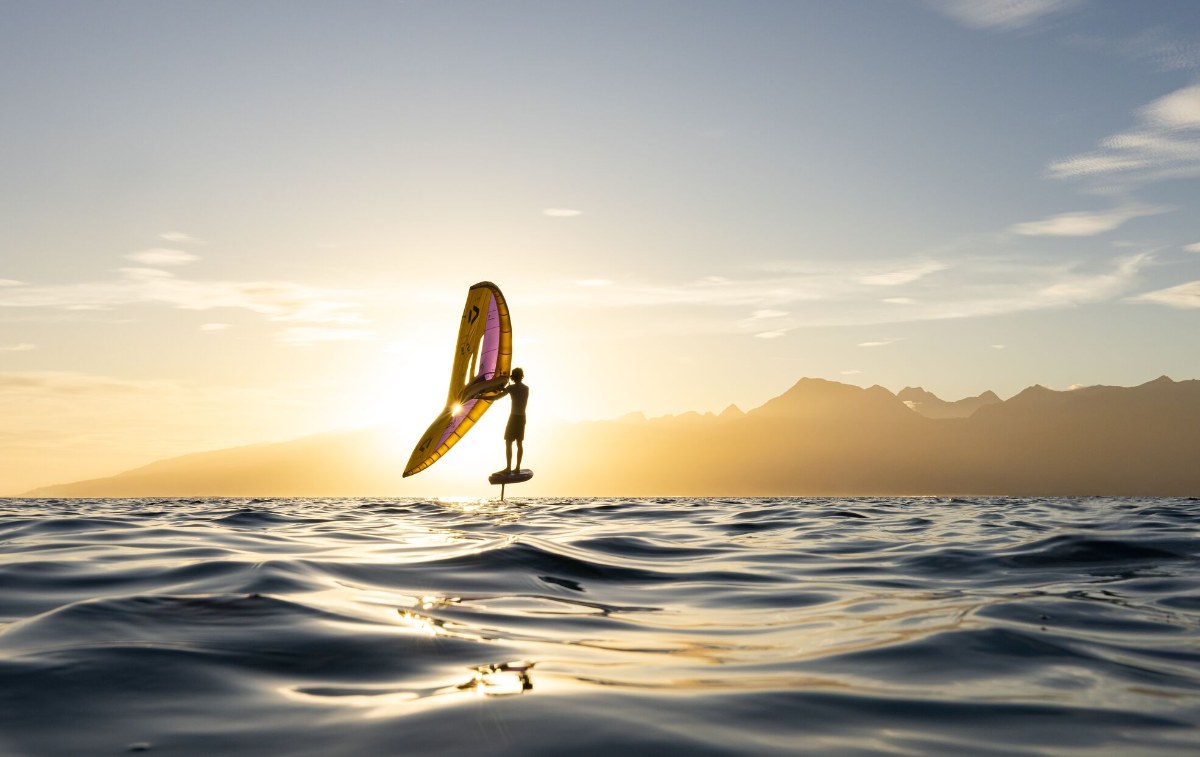
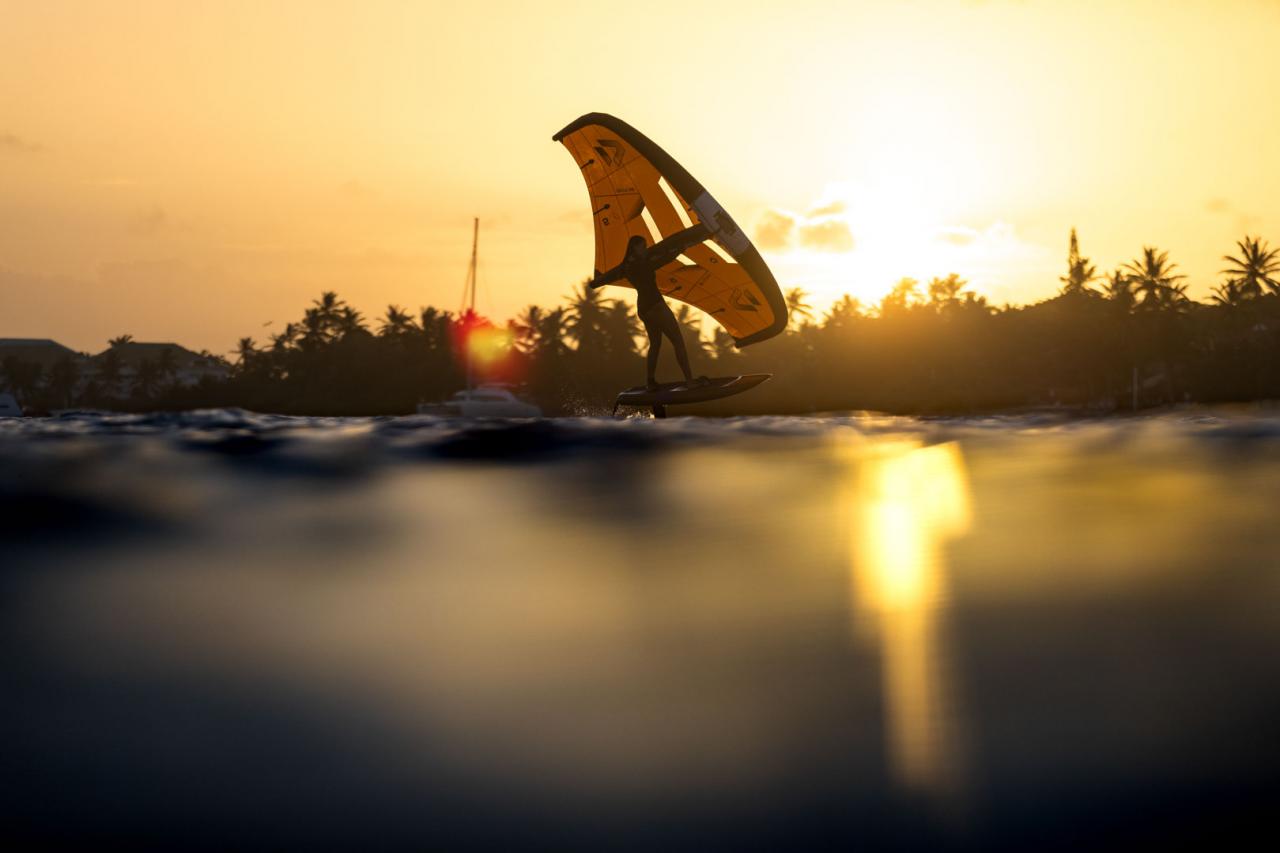
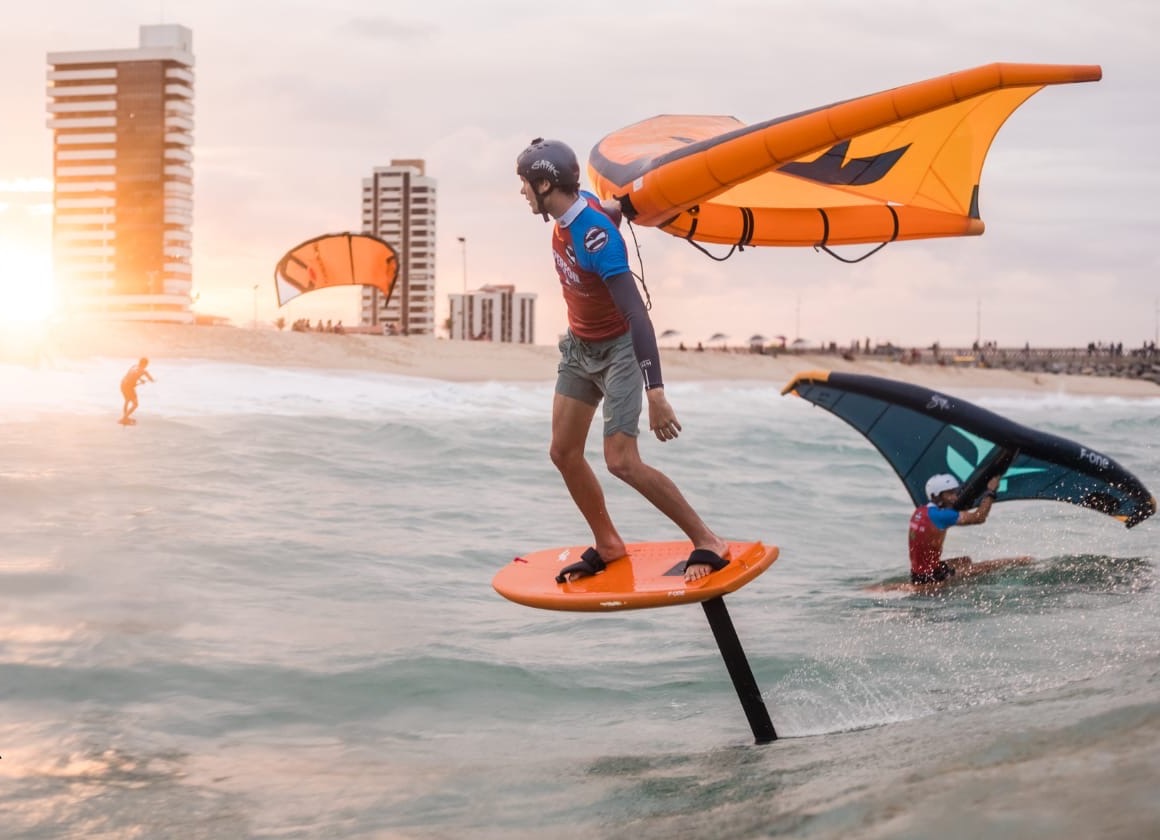
In contrast to other sports, the wing is not board-bound: it can be used while riding a surfboard, kiteboard or standup paddle board, but also in combination with a skateboard, snowboard, or even on inline skates. Wingsurfing on boards equipped with a foil is particularly popular, as it is possible to plane with small wings at around 8 knots. Wings come in different sizes; typically the smallest are around 2.2 m2, and the largest around 9 m2.
Technically, but also in terms of application, wingfoiling has numerous similarities to both windsurfing and kitesurfing. For example, the wing is controlled directly instead of using lines, but it still has a similar construction and functionality to a kite. The question of whether wingsurfing is a variation of kitesurfing, windsurfing or a completely independent sport is not just of a theoretical nature: it also concerns, for example, the extent to which kite bans at the spots also apply to wingsurfers.
wingsurfing lessons
MALIA PORT
From our gallery

best WINGsurfing locations
ARINA BEACH - MALIA PORT